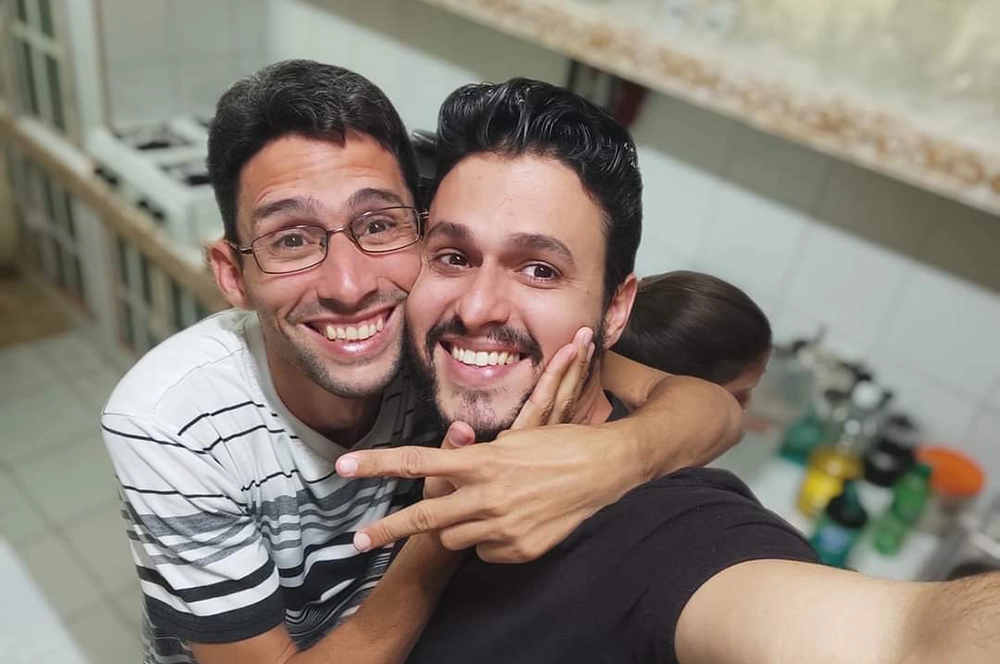
One afternoon in October 2021, four State Security officers knocked on Ernesto and Carlos’s door. A red-lettered sign reading “C1940” had disturbed the communist peace, referring to the restoration of the 1940 constitution in Cuba. The state security dogs allegedly tracked the scent to their house. Their peace would no longer last.
State Security agents began visiting the young couple regularly. They would enter the house, search their home, and disturb their privacy with questions like, “How do two men sleep here if there’s only one bed?” One day, a red can of paint, identical to the one used in the C1940 signs, appeared in their yard. Another day, two thieves broke into the house and stole only their phones. The government’s vendetta was in full swing: being homosexual, having political opinions, and daring to complain were too many undeserved privileges for a Cuban.
When Ernesto and Carlos went to the police station in Cojimar in November 2021 to report the theft of their phones, the unthinkable happened. The political police took them to separate rooms, beat them, and sexually assaulted them. Ten hours later, Ernesto and Carlos left the police station with their spirits shattered.
They had to flee Cuba without saying goodbye to their families. They packed what they could into their backpacks and embarked on the arduous emigration journey. Their destination was anywhere they could live as a couple. The journey was undeservedly cruel and lasted three years.
Their last encounter with Cuban State Security happened in Lima, Peru, on July 27th, 2024, when they were about to board a flight to Nicaragua to take the “route of the volcanoes” to the United States. Just before boarding, the airline informed them that the Nicaraguan government—a close ally of Cuba—had denied them entry.
The Alliance for Social Action (ALAS) heard their story and had the opportunity to help them on the final leg of their journey to Recife, Brazil. Our friends are still building their home. Like 1.5 million other Cubans who have fled Cuba in the past four years, Ernesto and Carlos embrace their history and hopes: More was lost in Havana, and they continue to say that the future belongs to freedom.
(*) The real names of the protagonists of this story have been undisclosed to protect their identity.